

BROWSE - VOLUME LIST
- A - Physics of the Earth's Interior
- B - Seismology
-
C - Geomagnetism
C-119, C-118, C-117, C-116, C-115, C-114, C-113, C-112, C-111, C-110, C-109, C-108, C-107, C-106, C-105, C-104, C-103, C-102, C-101, C-100, C-99, C-98, C-97, C-96, C-95, C-94, C-93, C-92, C-91, C-90, C-89, C-88, C-87, C-86, C-85, C-84, C-83, C-82, C-81, C-80, C-79, C-78, C-77, C-76, C-75, C-74, C-73, C-72, C-71, C-70, C-69, C-68, C-67, C-66, C-65, C-64, C-63, C-62, C-61, C-60, C-59, C-58, C-57, C-56, C-55, C-54, C-53, C-52, C-51, C-50, C-49, C-48, C-47, C-46, C-45, C-44, C-43, C-42, C-41, C-40, C-39, C-38, C-37, C-36, C-35, C-33, C-32, C-31, C-30, C-29, C-28, C-27, C-26, C-25, C-24, C-23, C-22, C-21, C-20, C-19, C-18, C-17, C-16, C-15, C-14, C-13, C-12, C-11, C-10, C-9, C-8, C-7, C-6, C-5, C-4, C-3, C-2, C-1
-
D - Physics of the Atmosphere
D-79, D-78, D-77, D-76, D-75, D-74, D-73, D-72, D-71, D-70, D-69, D-68, D-67, D-66, D-65, D-64, D-63, D-62, D-61, D-60, D-59, D-58, D-57, D-56, D-55, D-54, D-53, D-52, D-51, D-50, D-49, D-48, D-47, D-46, D-44, D-45, D-43, D-42, D-41, D-40, D-39, D-38, D-37, D-35, D-34, D-33, D-32, D-31, D-30, D-28, D-27, D-26, D-25, D-24, D-23, D-22, D-21, D-20, D-19, D-18, D-17, D-16, D-15, D-14, D-13, D-12, D-11, D-10, D-9, D-8, D-7, D-6, D-5, D-4, D-3, D-2, D-1
- E - Hydrology
- P - Polar Research
- M - Miscellanea
-
Online First
P - Polar Research
Sześć Moich Wypraw Polarnych z IGF PAN w Latach 1975–1991
Author(s): Janik T.
Volume: 456
Series: P-6
DOI: 10.25171/InstGeoph_PAS_Publs-2026-001
Volume: 456
Series: P-6
DOI: 10.25171/InstGeoph_PAS_Publs-2026-001
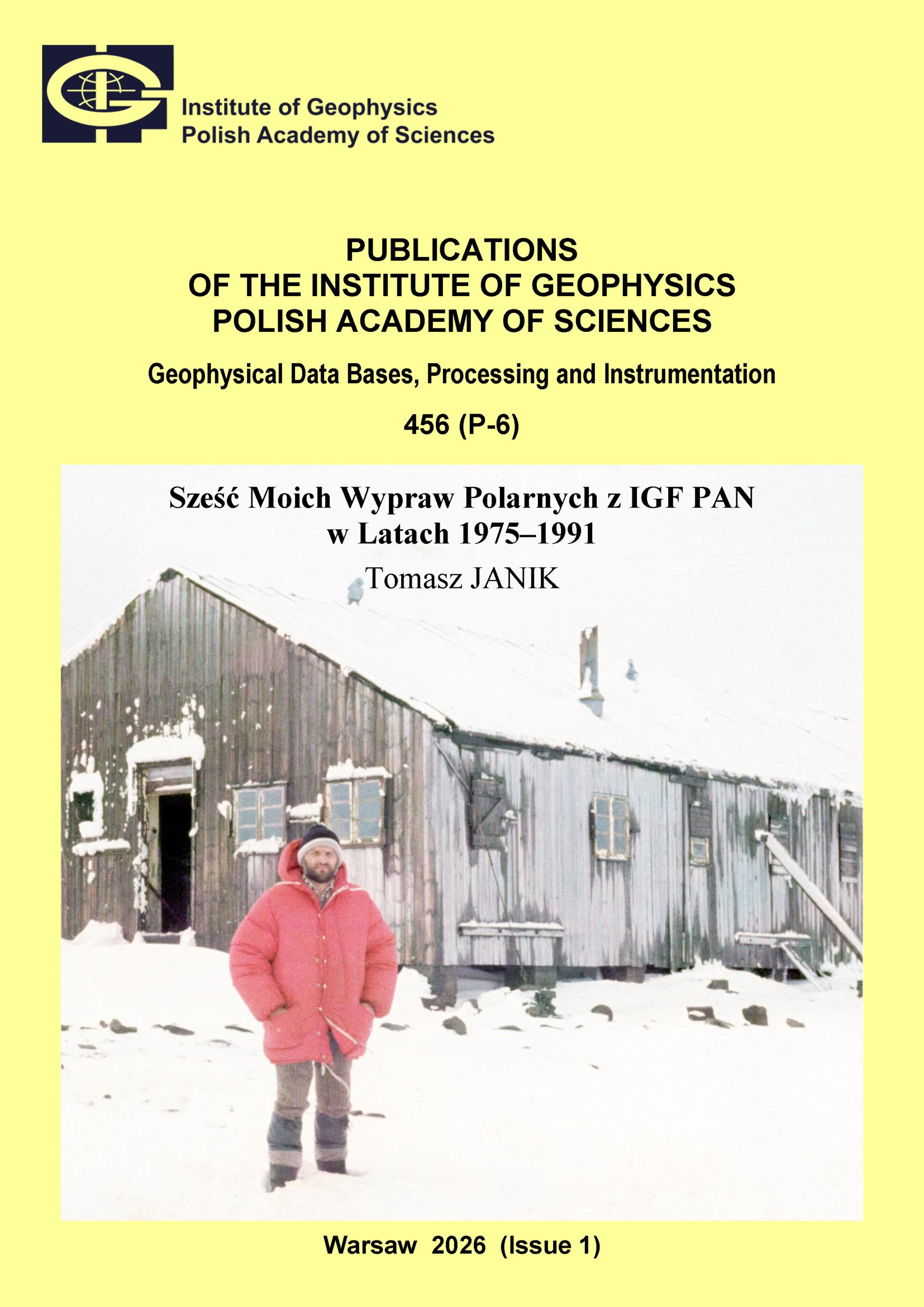
Podczas czterech ekspedycji geodynamicznych do Antarktyki Zachodniej w latach 1979–1991 przeprowadzone były morskie badania sejsmiczne wzdłuż ponad 1000 km szelfu Półwyspu Antarktycznego i Rowu Szetlandów Południowych, od wyspy Elephant do wyspy Adelajdy. Sposób prowadzenia tych badań jest unikalny do dzisiaj, z wielu względów już się nie powtórzy. Zakład Sejsmicznych Badań Litosfery prowadził też badania w Arktyce. W latach 1976–2019 wyruszyło osiem wypraw w rejon Spitsbergenu. Autor opisuje ekspedycję z 1985 roku, jak też wcześniejszą, jeszcze z czasów studenckich (1975), zorganizowaną przez IGF PAN, od której zaczął się jego kontakt z rejonami polarnymi. Wyprawy sejsmiczne dostarczyły bardzo ważnych obserwacji dotyczących północno-zachodniego skraju płyty euroazjatyckiej oraz Grzbietu Śródatlantyckiego na Północnym Atlantyku. Badania przyniosły rozwiązanie szeregu istotnych problemów naukowych, o czym donosiły masowe środki przekazu.
BOOK OF ABSTRACTS. 40th International Polar Symposium – Arctic and Antarctic at the Tipping Point, 4–7 November 2025, Puławy, Poland
Editor(s): Rurek M., Kozioł K., Moskalik M., Czarnecka M.
Volume: 455
Series: P-5
DOI: 10.25171/InstGeoph_PAS_Publs-2025-067
Volume: 455
Series: P-5
DOI: 10.25171/InstGeoph_PAS_Publs-2025-067
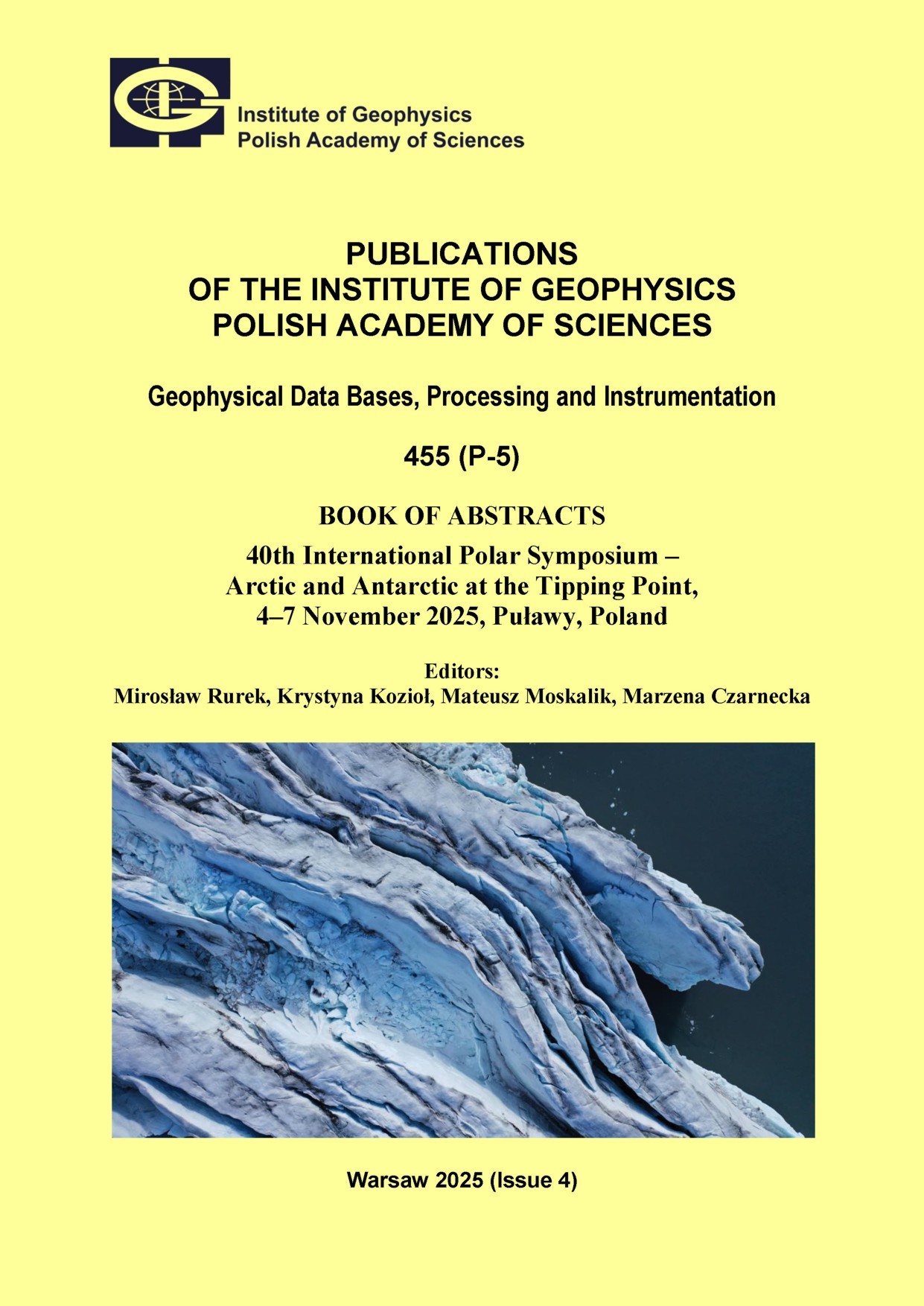
The Polar Symposium is a recurrent conference, typically occurring every two years, dedicated to Arctic and Antarctic topics, with a long tradition dating back to 1972. Since then, these meetings have been an excellent opportunity for integrating the polar community, exchanging experiences, and a discussion between Polish and international polar researchers representing various scientific disciplines. The Polar Symposium is currently co-organised by the Committee of Polar Research, Polish Academy of Sciences, and the Polish Polar Consortium, and until recently it has also been co-organised by the Polar Club of the Polish Geographical Society. Instead, during the 40th International Polar Symposium, a new Polish Polar Club will debut as an independent association, thus continuing the functioning of the Club since 1974.
SVALGEOBASE II: Tectono-thermal Evolution of Svalbard – from Metamorphic and Magmatic Processes to Geothermal Energy. Geological Workshop, Svalbard, 3–9 September 2024

Editor(s): Michalski K., Majka J., Głowacki P., Augland L., Manby G.M., Piepjohn K. ., Guarnieri P., Senger K. .
Volume: 452
Series: P-4
DOI: 10.25171/InstGeoph_PAS_Publs-2025-001
Volume: 452
Series: P-4
DOI: 10.25171/InstGeoph_PAS_Publs-2025-001
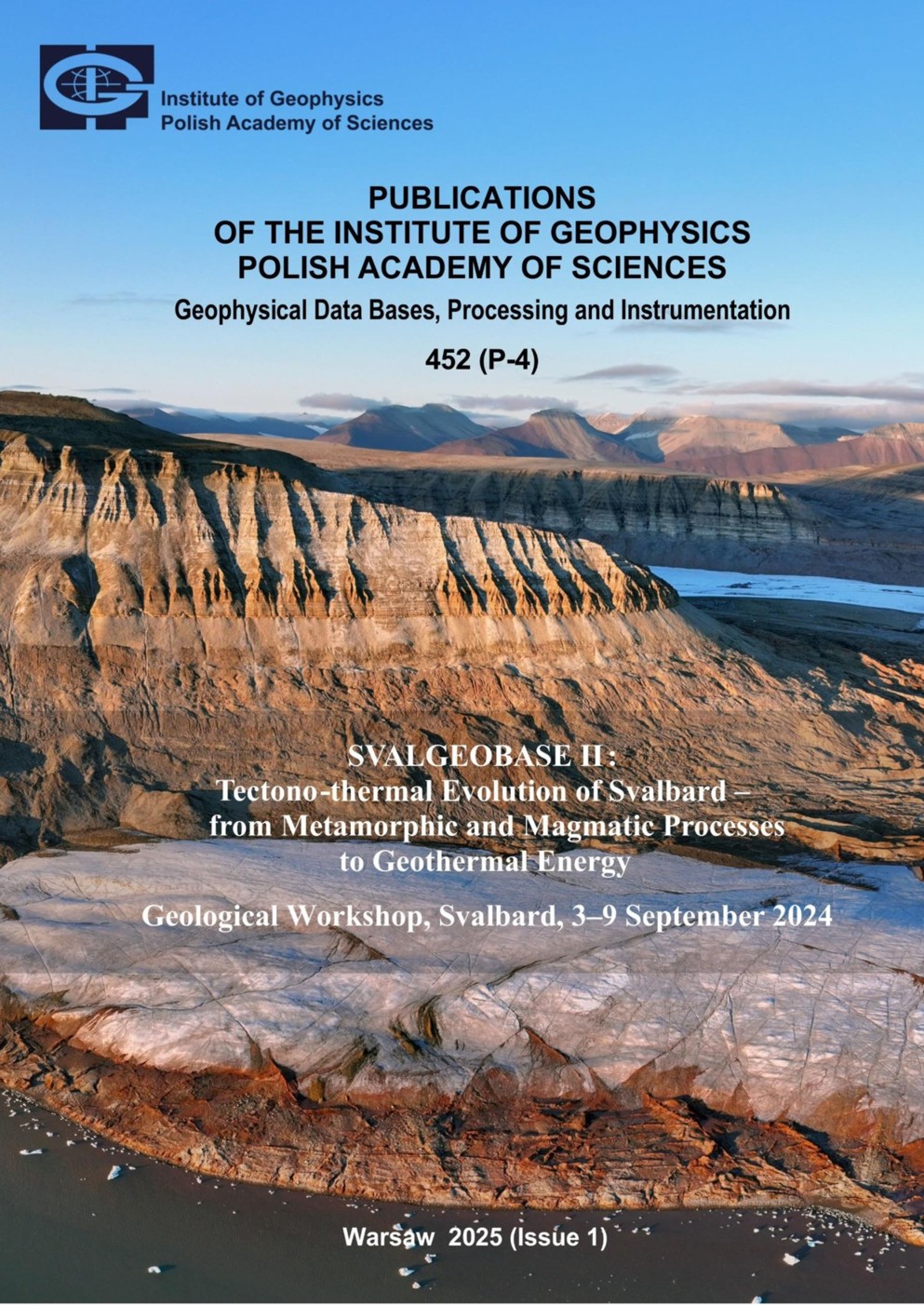
We are pleased to present the report from the second edition of the geological workshop SvalGeoBase II, titled “Tectono-thermal evolution of Svalbard – from metamorphic and mag-matic processes to geothermal energy”. Held from September 3 to 9, 2024, in Svalbard, this event continued the legacy of the first edition, SvalGeoBase I, organized in 2013 under the theme “Proterozoic and Lower Palaeozoic basement of Svalbard – state of knowledge and new research perspectives”.
The Influence of Topography and Vegetation on the Snow Cover in Tundra: Case Study from the Southern Spitsbergen Area
Author(s): Kępski D.
Volume: 438
Series: P-3
DOI: 10.25171/InstGeoph_PAS_Publs-2021-041
Volume: 438
Series: P-3
DOI: 10.25171/InstGeoph_PAS_Publs-2021-041

The aim of the study was to identify the snow cover distribution in the southern Spitsbergen tundra environment and to quantify its relationship with the topography and land cover. This was achieved by correlating vectorized cartographic materials, modeled climatic parameters and calculated topographic indices with snow cover properties measured in the field and obtained using remote sensing techniques. An important source of information used in the analyzes was time-lapse photography, which, thanks to the developed methodology and created tools, allowed to obtain snow cover extent data characterized by high temporal and spatial resolution. Snow cover distribution in the immediate vicinity of the Polish Polar Station obtained from time-lapse material was related to the results of satellite image classification from the 2014 ablation season.
Polish Polar Research: Green-and-White Paper under the aegis of the Polish Polar Consortium (PPC)
Author(s): Lewandowski M., Polkowska Z., Ziaja W., et al .
Volume: 431
Series: P-2
DOI: 10.25171/InstGeoph_PAS_Publs-2020-006
Volume: 431
Series: P-2
DOI: 10.25171/InstGeoph_PAS_Publs-2020-006
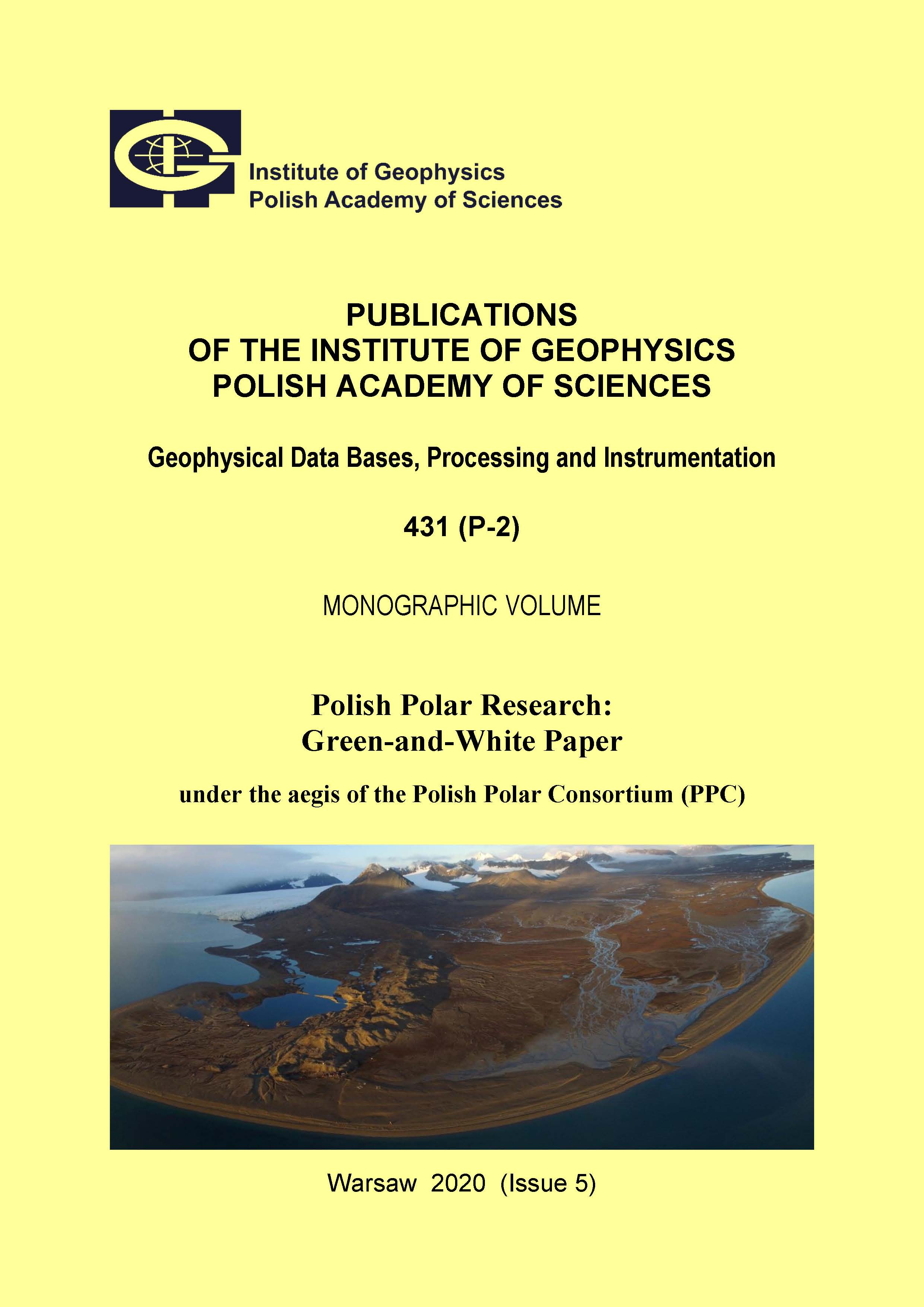
The aim of this document is to present the current state of Polish research in the polar areas, as well as to suggest the main directions for further development of this research, taking into account its educational and cognitive importance and its social and economic utility. The book is addressed to the state administration and the scientific communities in Poland, those already engaged in polar studies as well as those seeking new openings in their current research. The book should also be a starting point for updating the current Polar Research Strategy.